Independent, family-run LPG supplier near York since 1988

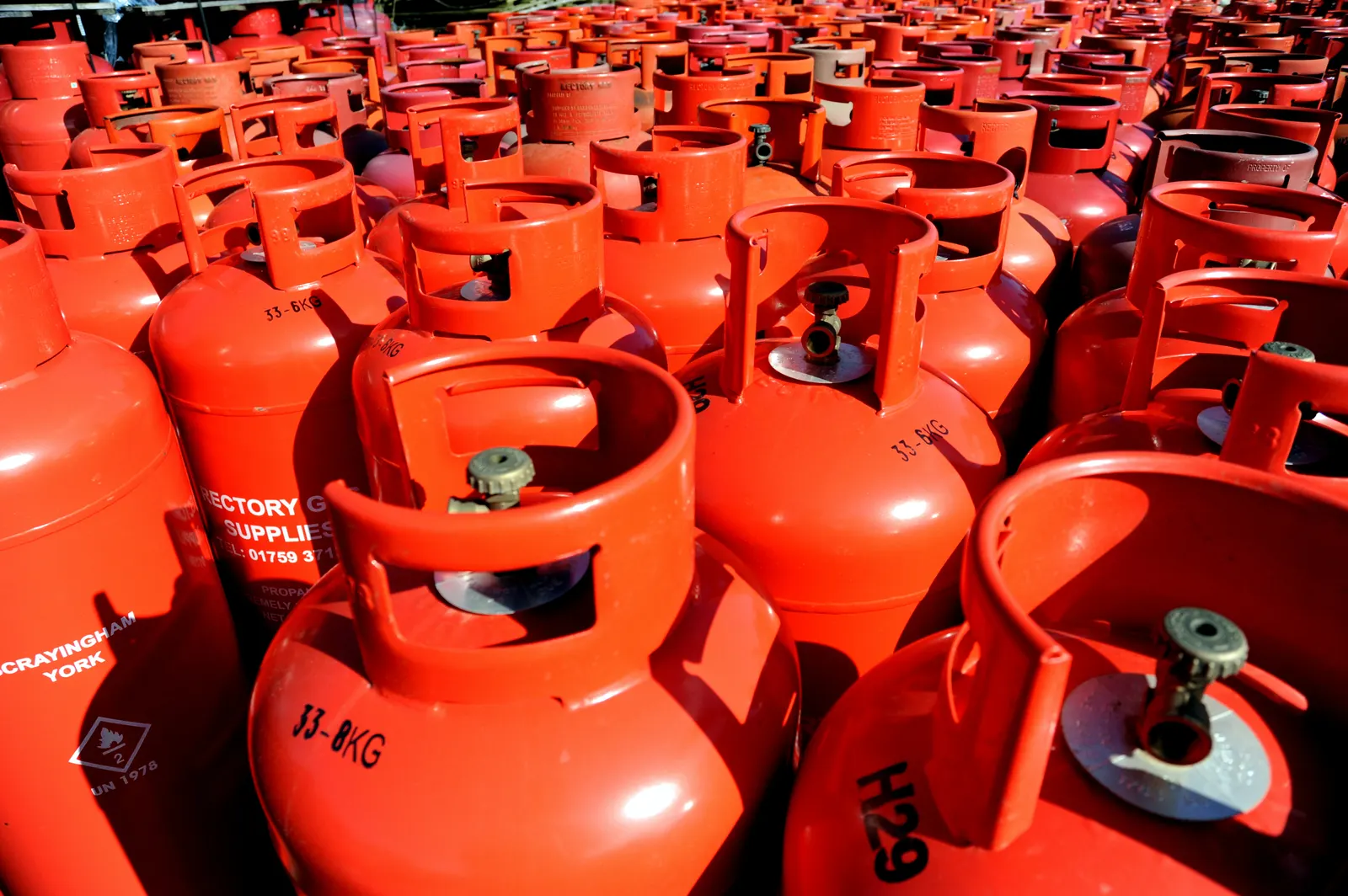
Common sizes
The cylinder sizes you'll come across.
LPG cylinders are sold by the weight of gas they hold. These are the sizes most commonly used by businesses in the UK.
| Cylinder | Gas | Typically used for | Worth knowing |
|---|---|---|---|
| 47 kg | Propane | Larger commercial kitchens, space heating, agricultural and process equipment | Heavy: usually connected in pairs with a changeover valve and left in place |
| 19 kg | Propane | Catering, mobile catering, site heaters and general commercial use | A popular all-rounder that one person can move with care |
| 18 kg FLT | Propane | LPG-powered forklift trucks | A specific forklift cylinder designed to be used lying on the truck |
| Smaller propane | Propane | Portable equipment, light-duty heating and outdoor cooking | Easy to handle, but needs changing more often |
| 15 kg and smaller | Butane | Indoor equipment designed for butane, such as cabinet heaters | Not suited to outdoor or cold use |
Estimating your use
How long will a cylinder last?
A quick sum gives you a useful estimate, so you can decide on cylinder size and how many to keep on site.
- Find the heat input. It is on the appliance data plate, in kW.
- Multiply by hours of use. That gives you the energy used per day in kWh.
- Divide by about 13.8. Each kilogram of propane holds roughly 13.8 kWh, so this gives kilograms of gas per day.
A worked example
A 10 kW space heater running for 8 hours uses about 80 kWh a day. Divided by 13.8, that is roughly 5.8 kg of propane a day, so a 19 kg cylinder would last a little over three days and a 47 kg cylinder around eight.
Real use varies with thermostat settings, weather and how hard equipment works, so treat this as a starting point. If the numbers point to several cylinders a week, it’s worth asking whether bulk LPG would suit you better.
Use the form below to tell us what you’re running and we’ll recommend the right cylinder and quantity.
Handling and storage
Keep cylinders safe on site.
Upright, always
Store, transport and use cylinders upright unless they are designed otherwise, such as forklift cylinders.
Outdoors and ventilated
A secure, well-ventilated outdoor area on firm, level ground is best.
Away from low spaces
LPG is heavier than air. Keep cylinders away from drains, cellars, pits and building openings.
Handle with care
Larger cylinders are heavy. Use a trolley and the right lifting technique, and close valves on empties.
Delivery and exchange
Getting cylinders to your door.
Once we’ve agreed the right cylinders, order by phone, email or voicemail. Most of our cylinder orders are delivered the same or next working day, and we collect your empties at the same time.
Find out more about gas cylinder delivery, or see commercial cylinder supply for setting up a regular arrangement.
For commercial customers
Switching your business gas is on us.
We’ll cover your outgoing tank uplift fees with up to £1,000 in account credit.
Account credit
up to£1,000
towards your outgoing supplier's tank uplift fees
Bulk commercial customers only, with a minimum usage of 20,000 litres per year. We’ll cover the outgoing supplier’s tank uplift fees up to a total value of £1,000, paid as credit on your Rectory Gas Supplies customer account. Terms apply.
Cylinder advice
Ask us which cylinder you need.
Describe what you’re running and we’ll come back with a recommendation for gas type, cylinder size and quantity.
- Advice from people who supply cylinders every day
- No obligation to order
- Quote for delivery to your site if you want one
Prefer to talk?
01759 371 305
Monday to Friday 7am to 4pm
Match the gas to your equipment first, then choose a size based on how much you use and how easily you can move and store it. Use the worked example on this page or ask us for advice.
Yes, larger installations often use two cylinders with an automatic changeover valve, so gas switches to the full cylinder when one empties. The installation should be set up by a Gas Safe registered engineer.
A forklift truck (FLT) cylinder is designed to be mounted on an LPG-powered forklift and supply gas in that position. Standard cylinders must not be used on forklifts.
The simplest way is to keep a full spare connected via a changeover valve, or check the weight. Planning deliveries around your typical use avoids surprises.
Use our quick quote form or call us on 01759 371 305, Monday to Friday 7am to 4pm. Tell us your site postcode, what you use gas for and roughly how much, and we’ll do the rest.