Independent, family-run LPG supplier near York since 1988
What propane is
Why businesses choose propane.
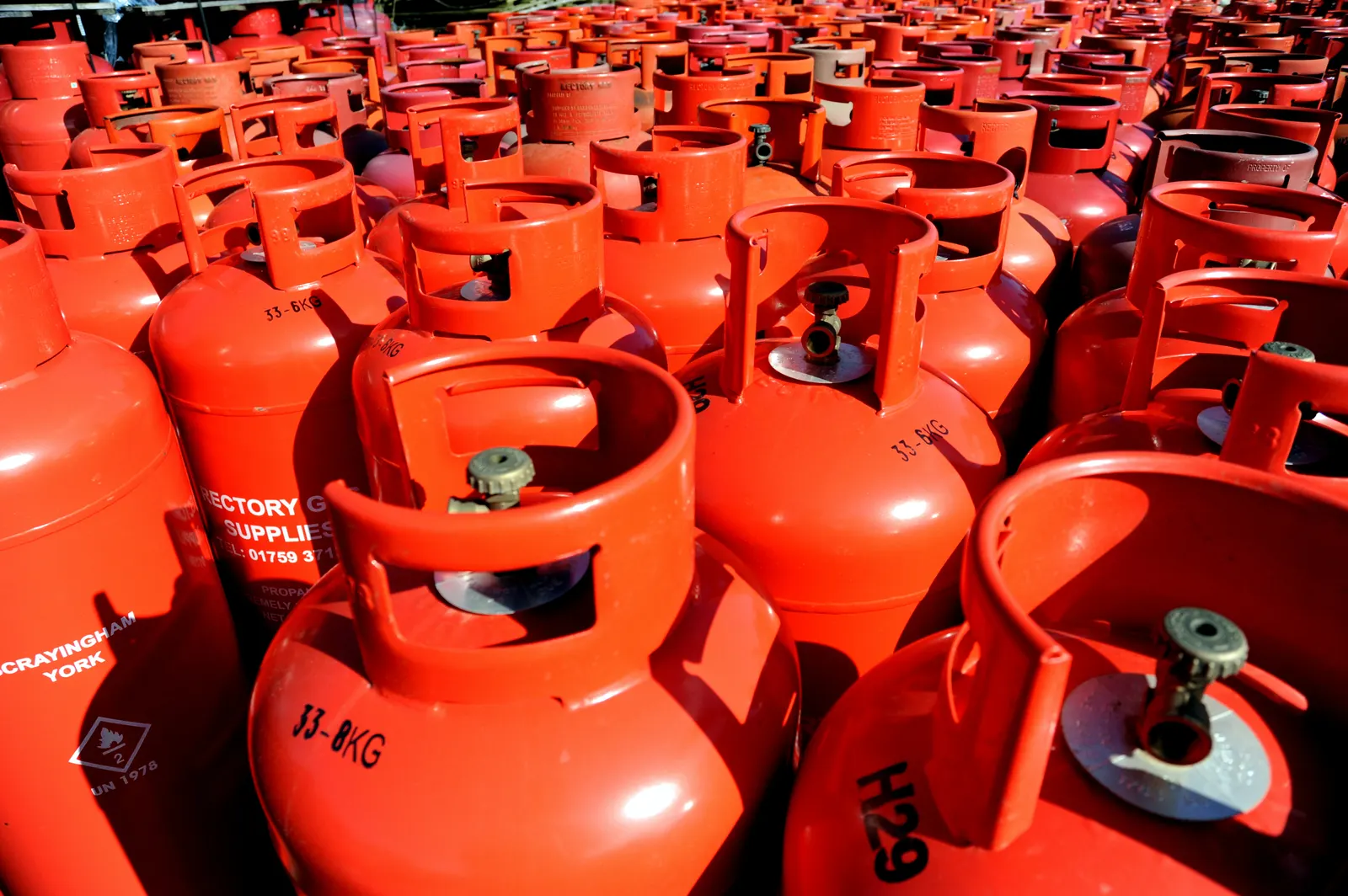
Propane is one of the two main types of LPG (liquefied petroleum gas). It is stored as a liquid under pressure in the cylinder and turns back into gas when you open the valve.
Propane boils at around minus 42°C, so it keeps turning into usable gas even on a freezing winter morning. That makes it the dependable choice for anything used outdoors or in unheated buildings, and the usual choice for commercial equipment.
What that means in practice
- Reliable gas supply outdoors and in cold weather, all year round
- Higher pressure than butane, which suits commercial burners and heaters
- Clean burning, with no soot or ash to deal with
- Portable, so it can go wherever the work is
Propane and butane need different regulators, so equipment should always be used with the gas it was designed for. Not sure which you need? See propane vs butane.
If you are changing cylinders every few days, a bulk LPG tank may suit you better. We supply both and will give you an honest view.
Applications
Where propane cylinders earn their keep.
Typical commercial uses for propane cylinders, and what to think about for each.
| Application | How propane is used | Things to think about |
|---|---|---|
| Commercial catering | Ranges, griddles, fryers, chargrills and mobile catering units | Enough cylinders to cover busy services; a safe outdoor cylinder store |
| Space heating | Portable and fixed heaters for workshops, marquees, barns and sites | Heater output decides how quickly a cylinder empties |
| Agriculture | Heating, workshop equipment and smaller drying or brooding jobs | Seasonal peaks; larger users often move to bulk |
| Forklift trucks | Dedicated forklift (FLT) cylinders for LPG-powered trucks | Number of trucks and shifts; FLT cylinders are a specific type |
| Events and outdoor hospitality | Patio heaters, outdoor kitchens and temporary heating | Delivery timing around the event; return of empties |
Sizes vary by application and supplier. Our cylinder sizes guide explains the common options, and we’ll confirm the right cylinder for your equipment when you ask for a quote.
Choosing a cylinder
Picking the right propane cylinder.
Check your equipment
The appliance data plate or manual tells you the gas type, pressure and heat input. Propane appliances need a propane regulator.
Estimate your usage
Heat input (kW) multiplied by hours of use gives a rough energy figure. Our sizes guide shows how to turn that into cylinders.
Think about handling
Larger cylinders need fewer changes but are heavy to move. Smaller cylinders suit portable equipment and tight spaces.
Plan storage
Keep cylinders upright, outdoors and well ventilated, away from drains, cellars and sources of ignition.
Delivery and exchange
Keeping you in propane.
Order by phone or email, or leave an order on our voicemail if no one can answer. Most of our cylinder orders are delivered the same or next working day.
When we deliver, we take away your empties. If you use propane every week, talk to us about a regular delivery pattern so you always have a full cylinder ready.
More detail on how cylinder delivery works.
A family-run supplier since 1988, a full member of Liquid Gas UK, and a team you can actually get hold of.
For commercial customers
Switching your business gas is on us.
We’ll cover your outgoing tank uplift fees with up to £1,000 in account credit.
Account credit
up to£1,000
towards your outgoing supplier's tank uplift fees
Bulk commercial customers only. We’ll cover the outgoing supplier’s tank uplift fees up to a total value of £1,000, paid as credit on your Rectory Gas Supplies customer account. Terms apply.
Get a quick quote
Request propane cylinder prices.
Three quick steps and one of our team will be in touch to talk through your options.
- Tell us your equipment and roughly how much propane you use.
- We confirm the right cylinder size and quantity.
- We quote and arrange delivery.
Prefer to talk?
01759 371 305
Monday to Friday 7am to 4pm
- 1What you need
- 2Your supply
- 3Your details
Step 1 of 3: What you need
FAQs
Propane questions.
What businesses ask us about propane cylinders.
Only in equipment designed or converted for propane. The two gases run at different pressures and need different regulators, so never swap one for the other without checking the appliance. A Gas Safe registered engineer can advise on conversions.
Yes. Propane boils at around minus 42°C, so it keeps vaporising in UK winter conditions. That is why it is the standard choice for outdoor and unheated spaces.
It depends on the cylinder size and how much gas your equipment burns. As a rough guide, each kilogram of propane holds roughly 13.8 kWh of energy, so a 10 kW heater running for an hour uses a little under 1 kg. See our sizes guide for a worked example.
Upright, outdoors, in a secure and well-ventilated place, away from drains, cellars, building openings and anything that could ignite gas. Read our LPG safety advice.
We deliver across most of the east of England from our main depot at Scrayingham, near York, and our other depots. Send us your site postcode with your quote request, or call 01759 371 305, and we’ll confirm whether we can supply you.
Use our quick quote form or call us on 01759 371 305, Monday to Friday 7am to 4pm. Tell us your site postcode, what you use gas for and roughly how much, and we’ll do the rest.